EX-IDF DEPUTY CHIEF: BEWARE OF GULF STATES, THEIR VALUES ARE DIFFERENT THAN OURS

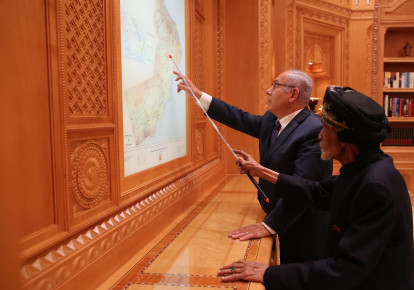
Prime Minster Benjamin Netanyahu and Sultan Sayyid Qaboos bin Said Al Said of Oman.  (photo credit: Courtesy)

Story here.
Prime Minster Benjamin Netanyahu and Sultan Sayyid Qaboos bin Said Al Said of Oman. (photo credit: Courtesy)

Golan said that a future war with Hezbollah, as horrible as it may be, would also give Israel an opportunity to “defeat the Iranian project in Lebanon.”
Israel should solidify its control over the Golan Heights, deal more closely with the Kurds, and be careful in its relationship with the Persian Gulf countries because their set of values are significantly different than Israel’s, Yair Golan, until recently the IDF’s deputy chief of staff, said Tuesday.

Golan, speaking at a Jerusalem conference entitled “New realities in the Eastern Mediterranean,” said that Israel now has a “strategic opportunity” to make the Israeli presence on the Golan Heights permanent, something he said is “crucial to the security of Israel.”

He bewailed the fact that Katzrin, the largest community in the Golan Heights with some 7,000 people, only grows by less than 2% a year. “This is a shame,” he said. “There should be a city of 20,000 to 25,000 people in the Golan in the next 10 years.”

10 Questions About the Compatibility of Islam with America

Wikipedia defines Islamophobia as the fear, hatred of or prejudice against the Islamic religion or Muslims, especially when seen as a geopolitical force or the source of terrorism. Yes, many people around the globe who identify with Islam are good, hard working, loving people. But that’s a separate issue from Islam itself. Here are 10 questions about the compatibility of Islam in America. Depending on your answers, does that make you an Islamophobe?

What are those ten questions? Check them put.

Asia Bibi: Pakistan’s Judicial Betrayal

The joy over the acquittal of Asia Bibi lasted barely 24 hours. The Christian mother of five from Pakistan was forced to spend eight years in prison, much of the time on death row, ostensibly for “blasphemy,” before the Supreme Court cleared her of any offense.

“I can’t believe what I am hearing, will I go out now? Will they let me out, really?”, Asia Bibi said by phone after the historic sentence, according to AFP news agency.

Unfortunately, massive street protests by extremist Muslims immediately erupted to pressure the government to delay her release. The phone network in some areas was suspended for reasons of “security”. Rioting caused schools in Islamabad, Punjab and Kashmir to close. Roads were blocked, paralyzing parts of Islamabad, Lahore and other cities. Christian schools warned parents to come and get their children for fear of violence. Churches were put on high alert. Protesters hold placards that read: “Hang Asia Bibi“.

“There will be a war if they send Asia out of country,” warned Khadim Hussain Rizvi, leader of Tehreek-e-Labbaik Pakistan (TLP), an Islamist party that supports blasphemy laws.

Threats by vigilante mobs who called for her death and warned of national unrest evidently worked. Pakistan’s government, after saying it would begin the process of preventing Asia Bibi from leaving the country, has now been accused of signing her “death warrant“.

The government apparently succumbed to pressure and signed an agreement giving in to many of the demands of Tehreek-e-Labbaik. Pakistan’s government also promised not to oppose a legal petition to reverse Asia Bibi’s release, and to put her name on the “exit control list” (ELC), a no-fly list, to prevent her from leaving the country.

“Placing Asia Bibi on the ECL is like signing her death warrant”, said Wilson Chowdhry of the British Pakistani Christian Association.

The agreement,” tweeted analyst Mosharraf Zaidi, “was a “historic capitulation“.

“It’s almost certain that Bibi will not be able to live in the country after her acquittal”, the famous Pakistani novelist Mohammed Hanif wrote in The New York Times.

“[B]arring her from leaving the country grants tacit permission to Tehreek-i-Labaik to hunt her down and murder her,” wrote Robert Spencer, a human rights activist and author of 18 books that include New York Times bestsellers.

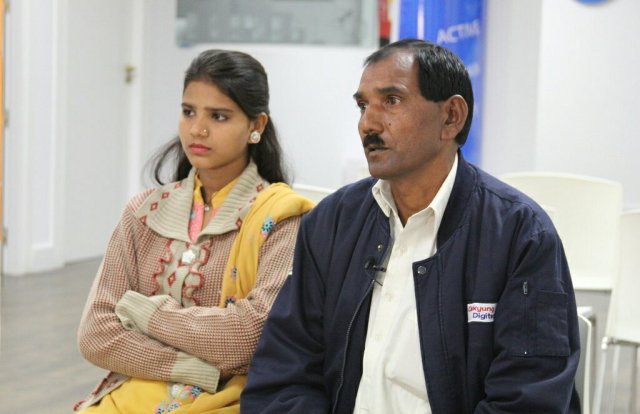
Asia Bibi’s husband, Ashiq Masih, just applied for asylum in the United States, Canada and England. “I am requesting the Prime Minister of the UK help us and as far as possible grant us freedom”, he said. “I am requesting the president of the United States, Donald Trump, to help us exit from Pakistan”, he added. That is why the pact between the Islamists and the government is seen as a betrayal. “The agreement has sent a shiver down my spine”, Masih said. “The current situation is very dangerous for us. We have no security and are hiding here and there, frequently changing our location”.

Meanwhile, Asia Bibi’s fate remains “uncertain“.

Read the full story from Gatestone Institute.

How Canada barred adoptions from Muslim countries — and used Shariah law to do it

At the Pakistani orphanage where he was abandoned at birth, little Imran packed his things and said goodbye to the children who weren’t so lucky.

At four years old, Imran believed he would finally have a family.

“Say goodbye to me,” he said. “My mom is coming to take me to Canada.”

That was two years ago. He never made it — all because of a controversial policy that’s kept hopeful Canadians separated from children they had created a space for in their hearts and their homes.

But after a year-long investigation by The Fifth Estate, that may change. The federal government says it will review a decision going back to 2013 when Canada banned adoptions from Pakistan without warning.

Full story here

The European Court of Human Rights goes full dhimmi

Founded in 1949 and headquartered in Strasbourg, the Council of Europe – which today counts every European state except Belarus and Vatican City as a member – is supposed to be a guardian of democracy and human rights. That’s its official raison d’être. It is separate from the European Union, and its court, the European Court of Human Rights (ECHR), whose judges are elected by the Council of Europe’s Parliamentary Assembly (a legislative body whose 324 members are drawn from Europe’s national parliaments), should not be confused with the EU’s European Court of Justice (ECJ). It began hearing cases and handing down verdicts in 1959.

How many Europeans are even aware of the Council of Europe’s existence – or, if they are, could explain what it does? How many know the difference between the ECHR and the ECJ? Relatively few, I suspect. But this is par for the course in Europe, where the elected governments, in the decades since World War II, have built up a network of international bodies that wield considerable power while operating in the shadows with little or no accountability to the people. Guardian of democracy, indeed.

Full story here.